
Hunza Valley Paradise in Pakistan
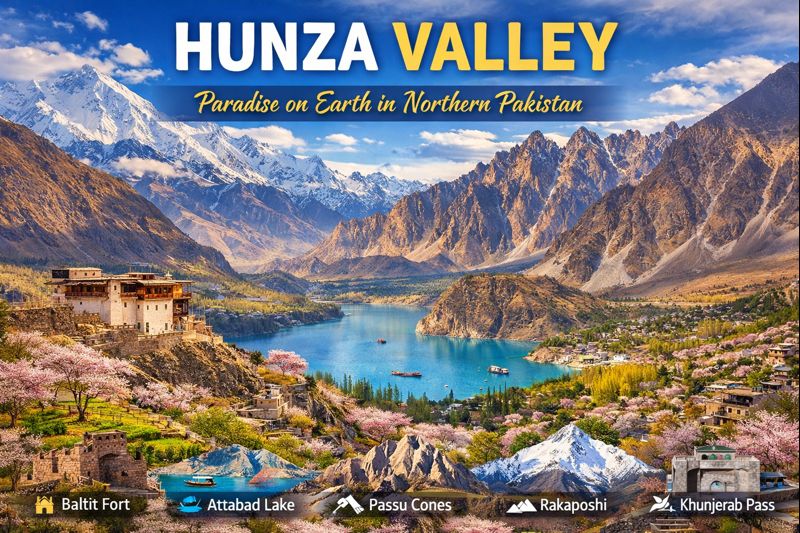
Paradise on Earth in Northern Pakistan
Hunza Valley is among the most breathtaking and peaceful destinations in northern Pakistan. Enclosed by towering snow-covered mountains, sparkling rivers, and terraced green fields, this magical valley welcomes travelers from around the globe. Hunza Valley is admired for its stunning landscapes, rich cultural heritage, and the genuine warmth of its people.
Where Is Hunza Valley Located?
Hunza Valley lies in the Gilgit-Baltistan region of Pakistan, close to the Pakistan–China border. The famous Karakoram Highway passes through the valley, offering travelers spectacular views throughout the journey and making Hunza relatively easy to access despite its mountainous terrain.
Why Hunza Valley Is So Famous
Hunza Valley has earned global recognition for several remarkable features, including:
Majestic peaks such as Rakaposhi, Ultar Sar, and Ladyfinger Peak
Scenic lakes like Attabad Lake and Borith Lake
Ancient landmarks including Baltit Fort and Altit Fort
Friendly, educated, and welcoming local communities
A calm atmosphere, pure air, and unspoiled natural beauty
Best Time to Visit Hunza Valley
The ideal time to explore Hunza Valley is between April and October, when the weather is pleasant and the scenery is at its best.
Spring (April–May): Blooming cherry and apricot trees
Summer (June–August): Mild temperatures and lush green landscapes
Autumn (September–October): Golden foliage and crystal-clear skies
Each season offers a unique and unforgettable experience.
Top Places to Visit in Hunza Valley
Hunza is filled with iconic attractions and scenic viewpoints, including:
Karimabad – the cultural heart of Hunza
Eagle’s Nest – famous for panoramic sunrise and sunset views
Attabad Lake – perfect for boating and photography
Passu Cones – dramatic, jagged mountain peaks
Khunjerab Pass – the highest paved border crossing in the world
Every destination showcases a different side of Hunza’s natural charm.
Culture and Food of Hunza Valley
The culture of Hunza is deeply rooted in tradition, harmony, and respect for nature. Locals primarily speak Burushaski, Wakhi, and Shina, while Urdu and English are also widely understood.
The Valley traditional food is known for being organic, simple, and nourishing, contributing to the community’s reputation for healthy living.
Why You Should Visit Hunza Valley
Hunza is a perfect destination for travelers seeking peace, adventure, and natural beauty. It is especially ideal for:
Nature and mountain lovers
Honeymoon couples
Family vacations
Trekking, hiking, and photography enthusiasts
The Trip of Hunza is offers both relaxation and inspiration.
How to Reach Hunza Valley
Travel options include private cars, tour coasters, and buses such as Daewoo and NATCO.
By Road (Most Popular Option)
A road journey to Hunza Valley is an adventure in itself.
Route:
Islamabad → Besham → Chilas → Gilgit → Hunza (Karimabad)
- Distance: approximately 600 km
- Travel time: 18–22 hours, depending on stops
By Air (Fastest Option)
- Flight from Islamabad to Gilgit takes about 45–50 minutes
- From Gilgit, Hunza Valley is a 2–3 hour drive
Flights depend heavily on weather, so keeping buffer days is recommended.
Where to Stay in Hunza Valley
Hunza Valley offers accommodation options for every budget:
Budget Hotels
Mid-Range Hotels
- Roomy Daastaan
- Hunza Serena Inn
- Fairy Land Hunza
Luxury Hotels
- Luxus Hunza
- Eagle’s Nest Hotel
Best areas to stay: Karimabad, Altit, and Duikar.
Local Transport in Hunza Valley
Visitors can move around using:
- Small cars like Suzuki Alto or Bolan
- Rental bikes for solo travelers
- Local jeeps for Passu and Khunjerab areas
Hiring a local driver is often safer and more informative.
Hunza Valley Food Guide
Visitors should not miss these traditional Hunza dishes:
Chapshuro – often called Hunza’s version of pizza
Diram Phitti – traditional bread served with butter or apricot oil
Harissa – a slow-cooked winter specialty
Fresh apricot juice – organic and refreshing
Popular restaurants include Cafe De Hunza, Rainbow Restaurant, and Glacier Breeze.
What to Pack for Hunza Valley
- Warm clothing (even during summer)
- Comfortable walking shoes
- Power bank
- Sunscreen and sunglasses
- Basic medicines
Safety and Travel Tips
- Hunza Valley is considered very safe for tourists
- SCOM and Telenor networks work best
- Respect local customs and traditions
- Avoid littering and protect nature
- Keep identification and hotel details with you
- Start early and plan an overnight stay in Chilas or Gilgit.
Sample 5-Day Hunza Travel Plan
Day 1: Islamabad to Chilas
Day 2: Chilas to Hunza (Karimabad)
Day 3: Baltit Fort, Altit Fort, Attabad Lake
Day 4: Passu Cones, Borith Lake, Khunjerab Pass
Day 5: Return journey
Culture and Food of Hunza Valley
Hunza Valley’s culture reflects centuries of tradition, strong community values, and a peaceful way of life. Festivals such as Nowruz, Ginani, and Tagham bring people together through music, dance, and traditional meals.
Traditional Dress
Men commonly wear woolen caps and waistcoats, while women dress in colorful outfits with embroidered caps and handmade jewelry—perfectly suited to the mountain climate.
Why Hunza Food Is So Healthy
The Hunza diet is often linked to longevity. It is:
Low in fat
Rich in fiber
Free from processed ingredients
Apricots play a central role in daily life, used fresh, dried, or as oil for cooking and skincare.
Cultural Etiquette for Visitors
When visiting Hunza Valley:
Dress modestly
Ask before photographing people
Respect traditions and local values
Support local businesses and communities
The Last
Hunza Valley is more than just a travel destination it is an experience of peace, culture, and natural wonder. From its towering mountains to its organic cuisine and welcoming people, Hunza leaves a lasting impression on every visitor.
Pingback: Top 10 Best Places to Visit in India for Food, Culture & Travel
Pingback: - TriplinePK
Pingback: Murree Snowfall Hotels & Huts | Top Stays Near Ghora Gali - TriplinePK
Pingback: Whopper Burger Calories, Price & Homemade Recipe - TriplinePK
Pingback: How to Check SIM Owner Details in Pakistan - TriplinePK
Pingback: Hampi Temple History – Complete Travel Guide - TriplinePK